
Guide to Bathroom Fan Installation: Step-by-Step for Your Home

Installing a bathroom exhaust fan is one of the smartest upgrades you can make to your home. It helps reduce moisture, prevents mold growth, and keeps your bathroom fresh and comfortable. If you’ve been thinking about improving your bathroom’s ventilation, this guide will walk you through the entire process. I’ll share clear, simple steps and tips to make your bathroom fan installation smooth and successful.
Why Bathroom Fan Installation Matters
Bathrooms are naturally humid spaces. Every shower or bath releases steam that can linger and cause problems. Without proper ventilation, moisture builds up on walls, ceilings, and fixtures. Over time, this can lead to peeling paint, warped wood, and even mold growth. Mold is not only unsightly but can also affect your family’s health.
A well-installed bathroom exhaust fan pulls moist air out of the room and vents it outside. This keeps your bathroom dry and fresh. It also helps reduce odors and improves air quality. For homeowners in South Jersey, where humidity can be high, a good bathroom fan is essential.
If you want to keep your bathroom in great shape and avoid costly repairs, investing in a quality fan and proper installation is key. Plus, a quieter, efficient fan makes your bathroom more comfortable every day.

Preparing for Bathroom Fan Installation
Before you start, preparation is crucial. Here’s what you need to do:
Choose the Right Fan
Select a fan that matches your bathroom size. Fans are rated by cubic feet per minute (CFM). A general rule is 1 CFM per square foot of bathroom space. For example, a 70-square-foot bathroom needs a 70 CFM fan. If your bathroom has a shower or tub, consider a fan with a higher CFM for better moisture control.
Gather Tools and Materials
You’ll need:
Screwdriver
Drill with bits
Wire stripper
Drywall saw or utility knife
Measuring tape
Ladder
Vent ducting (usually flexible aluminum or rigid metal)
Vent cap for outside wall or roof
Electrical wire and connectors
Safety glasses and gloves
Plan the Vent Route
The fan must vent outside, not into the attic or crawl space. Plan the shortest, straightest path for the duct to minimize airflow resistance. Check your home’s layout to find the best spot for the vent cap on the exterior wall or roof.
Turn Off Power
Safety first. Switch off the circuit breaker that controls the bathroom’s electrical circuit before starting any wiring.
Can I Install a Bathroom Exhaust Fan Myself?
Many homeowners wonder if they can handle bathroom fan installation on their own. The answer is yes, if you’re comfortable with basic electrical work and handy with tools. Installing a bathroom exhaust fan is a manageable DIY project for most people with some home improvement experience.
Here are some things to consider:
Electrical Wiring: You’ll need to connect the fan to your home’s electrical system. If you’re not confident working with wiring, it’s best to hire a professional electrician.
Cutting into Ceiling or Wall: You’ll have to cut a hole for the fan housing. Be sure to check for hidden pipes, wires, or joists before cutting.
Ventilation Path: Properly routing the duct to the outside is critical. Incorrect venting can cause moisture problems.
Building Codes: Local codes may require permits or specific installation standards. Check with your local building department in South Jersey.
If you feel unsure at any point, calling a trusted handyman service can save time and ensure the job is done right. For those ready to tackle it, I’ll guide you through the steps next.
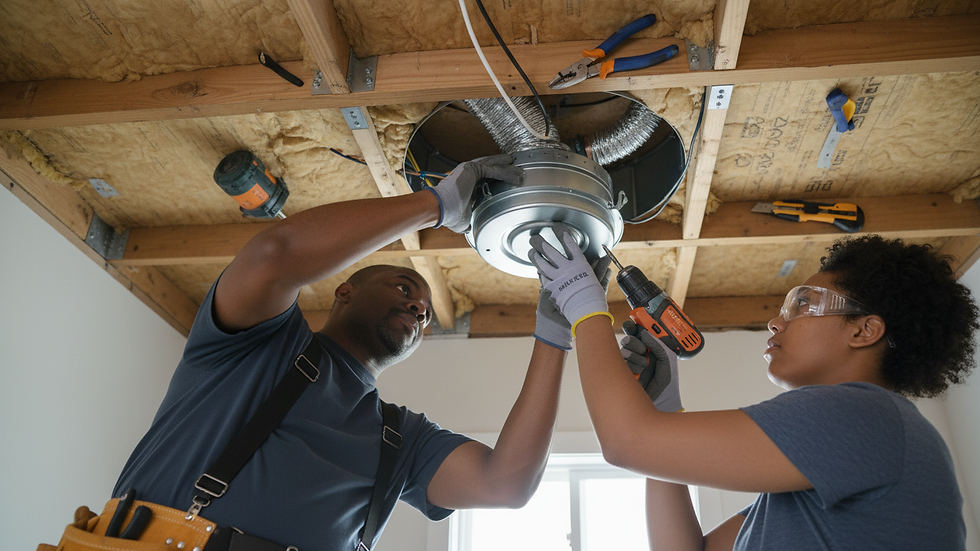
Step-by-Step Bathroom Fan Installation Process
Let’s get into the actual installation. Follow these steps carefully:
1. Mark and Cut the Ceiling Hole
Use the fan housing as a template to mark the hole on your bathroom ceiling. Double-check measurements to avoid mistakes. Use a drywall saw or utility knife to cut the hole.
2. Install the Fan Housing
Insert the fan housing into the hole. Secure it to the ceiling joists with screws or mounting brackets provided. Make sure it’s flush and stable.
3. Run the Vent Duct
Attach the duct to the fan’s exhaust port. Use foil tape (not duct tape) to seal the connection tightly. Run the duct to the exterior vent location. Secure the duct along the way with straps or clamps to prevent sagging.
4. Install the Exterior Vent Cap
From outside, install the vent cap where the duct exits your home. This prevents pests and rain from entering. Make sure the vent flap opens freely.
5. Wire the Fan
Connect the fan’s wiring to your bathroom’s electrical circuit. Typically, this involves connecting black (hot), white (neutral), and green or bare (ground) wires. Use wire nuts and electrical tape for secure connections. If your fan has a light or heater, follow the wiring instructions carefully.
6. Attach the Fan Grille
Once wiring and ducting are complete, attach the fan grille or cover. This usually snaps or screws into place.
7. Test the Fan
Turn the power back on and test the fan. It should run quietly and pull air effectively. Check outside to see if air is venting properly.
Tips for a Successful Bathroom Fan Installation
Choose a Quiet Fan: Look for fans with low sones ratings (1.0 or less) for a peaceful bathroom experience.
Use Rigid Ducting When Possible: Rigid metal ducts provide better airflow and are easier to clean than flexible ducts.
Seal All Joints: Use foil tape to seal duct joints and prevent air leaks.
Insulate the Duct: In colder climates, insulating the duct prevents condensation buildup inside the duct.
Consider a Timer or Humidity Sensor: These features help the fan run only when needed, saving energy and improving moisture control.
Follow Local Codes: Always check local building codes in South Jersey to ensure compliance.
When to Call a Professional
While many homeowners can handle bathroom fan installation, some situations call for professional help:
Complex electrical wiring or upgrades
Difficult vent routing through walls or roofs
Installing fans with integrated heaters or lights
Ensuring compliance with local building codes
If you want a guaranteed high-quality, hassle-free installation
Hiring a trusted handyman service ensures your bathroom exhaust fan installation is done safely and efficiently. It also protects your home investment by preventing future moisture problems.
Installing a bathroom exhaust fan is a smart way to protect your home and improve comfort. Whether you choose to do it yourself or hire a professional, understanding the process helps you make the best decisions. With the right fan and proper installation, your bathroom will stay fresh, dry, and inviting for years to come.
For those ready to get started, check out this detailed bathroom exhaust fan installation guide to ensure your project goes smoothly. Remember, a well-ventilated bathroom is a happy bathroom!




Comments